
Panther’s Toothsayer: High Point’s Non-Conference Report Card
Where We Stand
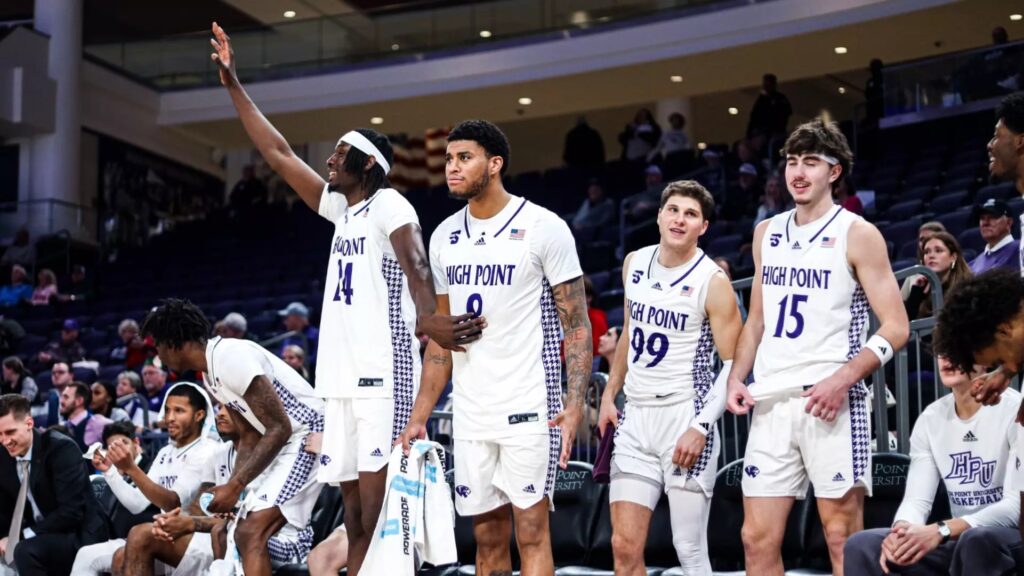
High Point enters Big South play at 12–3 after dismantling Division III Pfeiffer to close the book on non-conference action.
The gap in talent must be acknowledged, but the 123–64 victory over the Falcons still provided a showcase of what this team is and what it was built to become: an offensive juggernaut capable of beating opponents from every spot on the roster.
Seven different Panthers scored in double figures, perfectly illustrating the depth, balance, and firepower that define this group.
High Point owns one of the most efficient offenses in the country and a roster that, both on paper and often on the floor, appears capable of running away with the Big South once again.
The program records for points in a game and largest margin of victory have already been rewritten multiple times.
And yet, the non-conference story did not unfold in a straight line.
From an opening-night demolition of Furman that inspired national praise and premature undefeated talk, to gut-punch losses against UAB, Southern Illinois, and Appalachian State that exposed legitimate weaknesses, the first 15 games provided the clearest possible self-scout heading into the new year.
The talent is undeniable.
The offense is elite.
The margin for error, particularly on defense, is thinner than it was last season.
The Toothsayer verdict: This is the most offensively complete team High Point has ever fielded and potentially the most offensively talented roster in Big South history.
But championships are not won in spreadsheets alone. Conference tournaments are often decided through defense, rebounding, composure, and pure grit.
The Arc of the Non-Conference Story
The Opening Salvo: Furman and the Birth of Expectations
The season began with violence.
A 97–71 neutral-site victory over Furman was not merely a win. It was a statement that rippled throughout the national mid-major conversation.
The Panthers scored at will, controlled the tempo, and defended with an edge. The performance inspired hot takes, including the now-infamous suggestion that High Point could potentially finish undefeated.
It also served as an explosion of pent-up tension after an offseason filled with change.
High Point planted its flag and made one thing clear: the program was bigger than Alan Huss, and the Panthers intended to remain a power within the mid-major ranks.
The Highs: Offensive Mastery at Scale
Across 15 non-conference games, High Point:
- Averaged 95.3 points per game, a Top-25 national mark
- Posted an adjusted offensive efficiency of approximately 119
- Shot 38.3% from three
- Committed turnovers on only 13.1% of possessions
- Recorded an assist-to-turnover ratio near 1.9
Against lower-division opponents, the results were absolute annihilation:
- High Point 127, Averett 52
- High Point 129, Mary Baldwin 47
- High Point 123, Pfeiffer 64
These were not sloppy blowouts fueled by individual stat-chasing.
They were controlled, system-wide executions. Everyone ate. Everyone defended. Everyone understood the spacing, tempo, and standard.
This team does not merely survive mismatches.
It dominates from the opening tip and removes all doubt.
The Lows: The Three Losses That Still Sting
High Point’s three losses came in three of the most anticipated games on the schedule outside of Furman:
- UAB 91, High Point 74
- Southern Illinois 86, High Point 84
- Appalachian State 86, High Point 78 in overtime
The latter two losses linger most.
Those games revealed many of the same vulnerabilities:
- Open catch-and-shoot threes allowed after defensive rotations
- Late-game rim pressure conceded
- Defensive rebounding leakage
- An inability to secure stops when the offense briefly cooled
High Point did not lose those games because of a lack of talent.
The Panthers lost because elite offense masked defensive slippage until it no longer could.
They lost games where late execution, resilience, and defensive toughness became mandatory.
The Identity: What This Team Is
Offense: Elite, Diverse & Unselfish
There is no other way to say it.
High Point’s offense is terrifying.
The Panthers score:
- At the rim
- From the corners
- In transition
- Off live-ball turnovers
- Through secondary actions after the initial play breaks down
High Point can play quickly, with an adjusted tempo around 71 possessions, but it does not require chaos to generate efficient offense.
The ball rarely sticks. Shot quality remains high even when the pace slows, and multiple players can initiate or finish the same possession.
This is not a one-man offense.
It is a system operated by mature guards and completed by elite athletes, cutters, finishers, and shooters.
Player by Player: The Toothsayer Ledger
Known Stars
Rob Martin — The Conductor
Martin has delivered exactly what he was brought to High Point to provide.
- Primary initiation
- Late-clock stability
- Mistake minimization
- Control of pace and tempo
His usage is high, but the efficiency remains solid. More importantly, his decision-making anchors an offense that rarely beats itself.
When the Panthers appear calm, organized, and under control, Martin is usually the player steering the operation.
Cam’Ron Fletcher — The Ceiling
Fletcher is the best athlete on the floor in almost any gym and is increasingly becoming one of the most efficient scorers as well.
- Team-leading scorer
- Elite interior finisher
- Transition force
- Defensive disruptor when fully engaged
When Fletcher gets downhill, High Point appears to be playing in a completely different weight class.
He often steps onto the court with double-digit points already sitting in his pocket. The remaining challenge is producing the same defensive engagement and emotional buy-in every night.
The Foundation
Terry Anderson — The Pulse
Every great team has a player capable of changing the emotional temperature of a game.
For High Point, that player is T5.
When the Panthers look flat, Anderson:
- Attacks the rim
- Finishes through contact
- Defends multiple positions
- Ends scoring droughts
- Injects physicality and urgency
He may not consistently lead the headlines, but he is the soul of this roster and its most dependable two-way tone-setter.
Owen Aquino — The Glue
Aquino’s full impact does not always appear in the box score, but it is obvious on film.
- Rim protection
- Defensive communication
- Secondary passing
- Screening and boxing out
- Lineup connectivity
He is the team’s most important defensive connector. When Aquino is active and communicating, the entire defense becomes more stable.
He is also one of the better passing big men in the mid-major ranks and has recently shown increased confidence as a perimeter shooter.
Chase Johnston — The Specialist
Johnston continues shooting the cover off the basketball in the half court and remains invaluable as a floor spacer.
Transition threes and certain defensive matchups eventually led to a move to the bench, but his value remains clear.
- Elite perimeter shooter
- Championship pedigree
- Veteran voice
- True servant leader
He is the type of player every coach in the country would gladly take, even if the occasional breakaway three gives this writer a minor heart attack.
Vincent Brady II — The Return
Brady’s return added another layer of toughness, physicality, and shot creation.
- Physical guard defense
- Strong downhill slashing
- Secondary scoring punch
- Comfortable perimeter touch
He provides Flynn Clayman with additional lineup flexibility and valuable insurance.
Brady is another physically gifted and talented guard that few mid-major programs have the luxury of bringing off the bench.
Scotty Washington — The Spark
The move to the bench appears to have unlocked Washington.
- Improved shot selection
- Greater defensive energy
- Reduced pressure
- More consistent production
His recent stretch illustrates why he was so highly coveted in the transfer portal.
Washington brings the same instant-impact energy that once helped turn a Big South championship game on its head.
Breakouts & Surprises
Braden Hausen — The Leap
Hausen’s improvement is real.
- Increased minutes
- Improved shooting confidence
- Greater defensive reliability
- Better finishing counters around the rim
He has progressed from a rotation question into a trusted contributor, particularly within spacing-heavy lineups.
Hausen is no longer merely a shooter. His finishing and cutting have become legitimate counters when defenders run him off the line.
Conrad Martinez — The Organizer
Martinez has been one of the most pleasant surprises of the season.
- Elite feel
- Unselfish playmaking
- Tough point-of-attack defense
- Composure under pressure
He makes lineups cleaner and possessions calmer.
Every championship-level team needs a player capable of organizing the game without dominating the ball. His role mirrors what Kezza Giffa provided during his first season at High Point.
Caden Miller — The Young Gun
The true freshman big man was not expected to contribute significantly on such a deep roster, but he has forced his way into the conversation.
Miller has been hyper-efficient in limited minutes, finishing nearly everything around the basket while providing legitimate defensive value.
- Developed frame for a true freshman
- Elite field-goal percentage on low usage
- Solid rim protection on a per-possession basis
- Active rebounding in short stints
- Plays quickly and finishes cleanly
- Does not require touches or force offense
The limitation is obvious: free-throw shooting.
Until that improves, Miller’s late-game role will remain capped. Still, he is already outperforming expectations and providing legitimate answers behind Aquino.
The Disappointments So Far
Josh Ibukunoluwa
The flashes remain, but consistency has yet to arrive.
Last season, Ibukunoluwa was dubbed the “Bloomin’ Onion”: layered, intriguing, and beginning to blossom.
This season has been a disappointment so far.
- Limited minutes
- Defensive mistakes
- Failure to impose his size consistently
- Minimal offensive or rebounding impact
The tools remain present.
The impact has not followed.
Youssouf Singare
The pedigree has not translated.
Singare arrived from UConn after being recruited and coached by Dan Hurley, carrying the reputation of a player beloved by teammates and fans.
Expectations were understandably high.
- Limited offensive role
- Difficulty defending in space
- Occasional mental lapses
- Inconsistent rebounding and positioning
At this stage, he remains a matchup-dependent option rather than a foundational piece.
Defense: The Unfinished Business
The defensive numbers are acceptable, but they are not great, and they become less impressive once opponent quality is considered.
- Adjusted defensive efficiency around 109 to 110
- Too many catch-and-shoot threes allowed
- Too many paint touches after scramble situations
- Too many second-chance points surrendered
According to Clayman, the film shows individual breakdowns and communication failures rather than fundamental scheme problems.
That is encouraging because breakdowns can be corrected.
The larger question is what happens when the scheme does not force turnovers.
Can High Point produce consistent stops in the half court when opponents protect the basketball, attack the glass, and force the Panthers to defend through the end of the possession?
That answer will determine the ceiling of this team.
Flynn Clayman: Year One Verdict
What He Has Done Well
- Integrated a largely new roster seamlessly
- Built elite offensive spacing
- Empowered multiple creators
- Maintained locker-room buy-in
- Won expected games emphatically
- Preserved the program’s national relevance after a coaching transition
Where Growth Is Needed
- Defensive consistency
- A defined late-game defensive identity
- Greater rebounding urgency
- Tighter rotations in close games
- More dependable responses after opponent runs
How This Team Compares to Last Season
Better
- Offensive ceiling
- Shooting depth
- Guard creation
- Ball security
- Bench scoring
- Lineup versatility
Worse
- Interior defense
- Defensive rebounding
- Rim deterrence
- Late-game stops
- Mental toughness in close games
Last season’s team was tougher defensively and mentally.
This year’s team is considerably deadlier offensively.
The question is simple:
Can those two identities meet in the middle?
The Toothsayer Final Word
High Point enters Big South play as:
- The league’s most talented roster
- The conference’s most dangerous offense
- The hunted rather than the hunter
If the Panthers defend with urgency, rebound with intent, and communicate with discipline, there is little doubt this is an NCAA Tournament-caliber team once again.
If they do not, they are still talented enough to win the league.
But they may not be dominant enough to create separation when it matters most.
And they may not be tough enough to consistently win close games when the tension peaks.
The tools are here.
So are the concerns.