
Saturday, November 29
Location: Qubein Center, High Point, North Carolina
Series & Setting
High Point returns home at 6–1, fresh off a Boardwalk Battle championship in Daytona Beach.
The Panthers were tested by a pair of quality mid-major opponents but left Florida with the title after playing some of their cleanest and most balanced basketball of the season.
Awaiting them is an opponent with a very familiar face on the sideline, albeit wearing a completely different-colored tie: Tim Craft and the Western Carolina Catamounts.
After taking a year off, High Point renews one of the most frequently played series in program history. This will be the 61st meeting between the two purple, big-cat programs from North Carolina.
The Panthers own a 40–20 all-time advantage in a series dating back to 1946.
This will also be the first meeting between the programs since Craft took over in Cullowhee.
High Point fans know him well. Craft spent 11 seasons at Gardner-Webb, transforming the Runnin’ Bulldogs into a consistent Big South contender. He led the program to its first NCAA Tournament appearance and developed a reputation for producing upsets against high-major opponents.
Craft recorded six victories over Power Five programs during his Gardner-Webb tenure. Although he went just 10–12 against High Point, his teams regularly elevated their play when facing more talented rosters.
Saturday presents another of those situations, with the Panthers expected to enter as substantial home favorites.
However, this Western Carolina team is no longer the inexperienced rebuilding project that finished 8–22 last season.
The Catamounts entered 2025–26 returning the second-most production in the Southern Conference and have already shown tangible improvement, particularly behind preseason All-SoCon forward Marcus Kell and a more experienced backcourt.
They are better, older, and more dangerous. They also arrive with several flaws High Point is well-equipped to exploit.
Overview: What Western Carolina Wants to Be
Western Carolina is very much a potential Year 2 leap under Tim Craft.
Last Season
- 8–22 overall
- 4–14 in SoCon play
- One of the youngest and least experienced teams in Division I
- Sub-100 adjusted offensive efficiency
- Below 30% from three-point range
This Season
- Much of last year’s young core has returned
- Multiple veteran guards and frontcourt pieces have been added
- The offense remains uneven, but the roster is substantially more dangerous
Early Profile
| Category | Stat |
|---|---|
| Adjusted Offensive Efficiency | Approximately 101 |
| Adjusted Defensive Efficiency | Approximately 111 |
| Adjusted Tempo | Approximately 72 possessions |
| Effective Field-Goal Percentage | 45.3% |
| Turnover Rate | 21.7% |
| Offensive Rebounding Rate | 30.0% |
| Three-Point Percentage | 27.3% |
| Two-Point Percentage | 48.4% |
| Free-Throw Percentage | 67.5% |
The translation is straightforward.
Western Carolina plays hard, rebounds aggressively, and can defend effectively for stretches. However, poor shooting and excessive turnovers remain capable of sinking the entire operation.
High Point, meanwhile, continues to profile as a legitimate mid-major problem.
| Category | Stat |
|---|---|
| Adjusted Offensive Efficiency | 115.3 — Top 60 nationally |
| Adjusted Defensive Efficiency | 106.1 |
| Effective Field-Goal Percentage | 56.7% |
| Two-Point Percentage | 60.7% |
| Three-Point Percentage | 33.8% |
| Offensive Rebounding Rate | 31.2% |
| Turnover Rate | 11.8% |
The Panthers possess a deep and flexible rotation, while Cam Fletcher, Rob Martin, and Conrad Martinez are all producing at an all-conference level.
This matchup places an elite, modern, efficient offense against a defense-first rebuild still searching for consistent scoring.
Team Identity: Creators, Crashers & Craftball
Creators
Western Carolina’s offensive ceiling is largely determined by three players:
- #0 Cord Stansberry — A streaky but dangerous perimeter scorer who shoots approximately 91% from the free-throw line.
- #33 Marcus Kell — A preseason All-SoCon forward with legitimate pick-and-pop ability and three-level scoring potential.
- #3 Julien Soumaoro — A veteran Craft disciple who provides stability, shooting, and secondary creation.
If that trio scores efficiently, the Catamounts can remain competitive. If they struggle, Western Carolina does not possess many alternative sources of reliable shot creation.
Crashers
The Catamounts relentlessly attack the offensive glass.
- Abdulai Fanta Kabba brings excellent shot-block timing, physical rebounding, and lob-finishing ability.
- Vernon Collins plays with a relentless motor and generates second chances.
- Chase McKey provides efficient finishing and connective frontcourt play.
Together, they form one of the stronger offensive-rebounding units High Point has faced this season.
If there has been one recurring weakness for the Panthers, it has been failing to finish defensive possessions with a rebound. High Point has occasionally defended well for 20 seconds, only to surrender a second opportunity.
That will be the Panthers’ most significant challenge on Saturday.
Craftball Defense
Tim Craft’s teams are traditionally defined by several defensive principles:
- Physicality
- Clean rotations
- Walling off the paint
- Strong interior contests
- Forcing opponents into lower-value perimeter attempts
Expect Western Carolina to shrink the floor, protect the basket, and challenge High Point to make jump shots.
The Panthers are more than capable of doing so, but their perimeter shooting has been streaky enough to make the strategy worth attempting.
Key Catamounts to Know
#33 Marcus Kell — Preseason All-SoCon
- 11.7 points per game last season
- 5.5 rebounds per game
- 37.9% from three with 44 makes
- Team leader in blocked shots
- Dangerous pick-and-pop option
Kell possesses an ideal modern stretch-forward profile. He can punish slow closeouts, space the floor, and protect the rim on the other end.
He can also be targeted physically. High Point should force him to defend repeated drives, screens, and rebounding battles.
#0 Cord Stansberry — Streaky Sniper
- 11.2 points per game
- Made 52 three-pointers last season
- 91.3% from the free-throw line
- Career-high six threes against VMI
If Stansberry gets hot, Western Carolina can remain within striking distance.
If he does not, the Catamounts often struggle to produce enough perimeter scoring to keep pace.
#3 Julien Soumaoro — Craft’s Guy
Soumaoro spent three seasons playing for Craft at Gardner-Webb and understands exactly what the coach expects.
He is a capable shooter, steady decision-maker, and competitive guard who represents a major upgrade over last season’s turnover-prone backcourt.
Other Players to Monitor
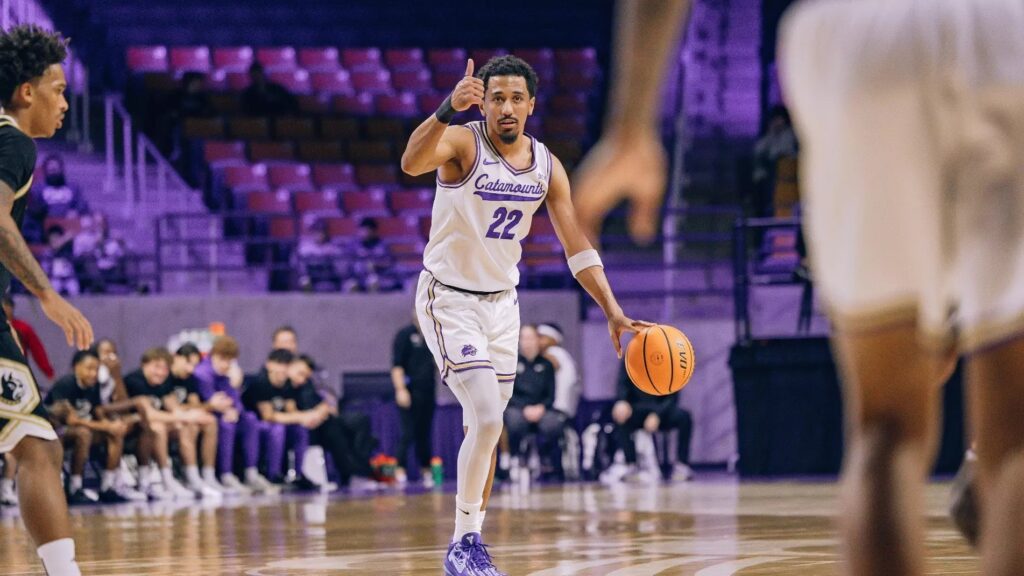
- #22 Tidjiane Dioumassi (6’4″, Gr., G) — Southern transfer, elite passer, strong point-of-attack defender, and limited shooter.
- #7 Abdulai Fanta Kabba (7’0″, So., C) — Rim protector, rebounder, and lob threat.
- Vernon Collins and #12 Samuel Dada — Frontcourt size, activity, and energy.
- #2 CJ Hyland, #20 Fischer Brown, and #8 Tahlan Pettway — Young perimeter options who provide shooting attempts and defensive effort.
Tempo-Free Snapshot
Western Carolina
| Category | Stat |
|---|---|
| Record | 3–3 |
| Adjusted Offensive Efficiency | Approximately 106 |
| Adjusted Defensive Efficiency | Approximately 110 |
| Effective Field-Goal Percentage | 48.4% |
| Three-Point Percentage | 27.6% |
| Turnovers | High |
| Offensive Rebounding | Strong |
| Free-Throw Shooting | A relative strength |
High Point
| Category | Stat |
|---|---|
| Record | 6–1 |
| Adjusted Offensive Efficiency | 115+ |
| Adjusted Defensive Efficiency | Approximately 106 |
| Effective Field-Goal Percentage | 56.7% |
| Two-Point Percentage | 60.7% |
| Adjusted Tempo | Top 80 nationally |
| Turnover Rate | Top 25 nationally |
| Depth | Clear advantage |
The Panthers are currently operating at a higher tier, and the analytics clearly reflect that gap.
Coaching Breakdown: Tim Craft
Tim Craft enters this matchup with a 10–12 career record against High Point.
He thrives in structure, opponent-specific scouting, and half-court execution. His teams are typically prepared, physical, and comfortable turning games into possession-by-possession battles.
Historically, however, Craft’s teams have had difficulty against opponents that combine pace, defensive pressure, and highly efficient offense.
This Western Carolina roster fits his preferred defensive vision, but it also carries some familiar offensive limitations.
The Catamounts can become turnover-prone, stagnant, and overly dependent on a small number of shot-makers.
High Point’s pace, depth, and rim pressure represent exactly the type of profile that has traditionally caused Craft problems.
Matchup Outlook vs. High Point
Pace Advantage: High Point
Western Carolina would prefer a slower, mid-possession game built around physical defense and deliberate execution.
High Point wants to run, rotate bodies, and overwhelm opponents with repeated waves of pressure.
Expect the Panthers to push the tempo immediately and test whether Western Carolina’s guards can make sound decisions while playing faster than they prefer.
Interior Battle
Western Carolina rebounds well, but High Point possesses several significant frontcourt advantages.
- Cam Fletcher and Terry Anderson are elite finishers around the rim.
- The Panthers can rotate multiple frontcourt players and maintain fresh legs.
- High Point can pull Western Carolina’s traditional centers away from the basket through screening and spacing.
The Catamounts’ offensive rebounding may keep them competitive, but it is unlikely to swing the outcome unless the Panthers completely lose discipline on the glass.
High Point’s Shooting vs. Western Carolina’s Coverage
Western Carolina will prioritize protecting the paint, but that strategy can concede clean perimeter attempts.
That is a significant risk against a High Point roster with seven or eight players capable of getting hot from beyond the arc.
The Panthers do not need to shoot exceptionally well. They simply need to punish the most obvious help rotations and avoid turning open looks into rushed ones.
The Breaking Point
Western Carolina does not possess enough reliable shot creation to comfortably survive extended offensive droughts.
High Point’s depth has routinely become decisive during the second half, when opponents begin losing discipline and their primary creators start to fatigue.
If the Catamounts go four or five possessions without scoring, the Panthers are capable of turning a close game into a double-digit margin almost immediately.
Keys for High Point
- Control Marcus Kell on the perimeter. Do not allow him to settle into pick-and-pop rhythm.
- Rebound collectively. Guards and wings must help finish possessions against Western Carolina’s aggressive frontcourt.
- Pressure the Catamount guards. Force the turnover issues to resurface.
- Run after makes and misses. Western Carolina is less comfortable when the game accelerates.
- Use lineup flexibility. Pull the Catamount centers away from the rim and attack them in space.
Toothsayer’s Take
Western Carolina is clearly improved.
The Catamounts have more experience, legitimate frontcourt size, a proven scorer in Marcus Kell, and a coach who knows High Point as well as almost anyone outside the Big South.
Still, the matchup leans heavily toward the Panthers in nearly every significant area:
- Pace
- Depth
- Shot creation
- Rim finishing
- Turnovers forced and avoided
- Overall athleticism
Western Carolina’s best path is to slow the game down, dominate the offensive glass, and hope Kell and Stansberry produce exceptional shooting performances.
That may keep the Catamounts competitive for a half.
At home, with High Point’s depth and offensive efficiency continuing to trend upward, the Panthers should eventually become too much.
Western Carolina hangs around through physicality and second-chance scoring, but High Point’s pace and shot creation create separation after halftime.
Prediction
High Point 92, Western Carolina 78